Hashimoto's Hair Loss: What Your Doctor Might Be Missing
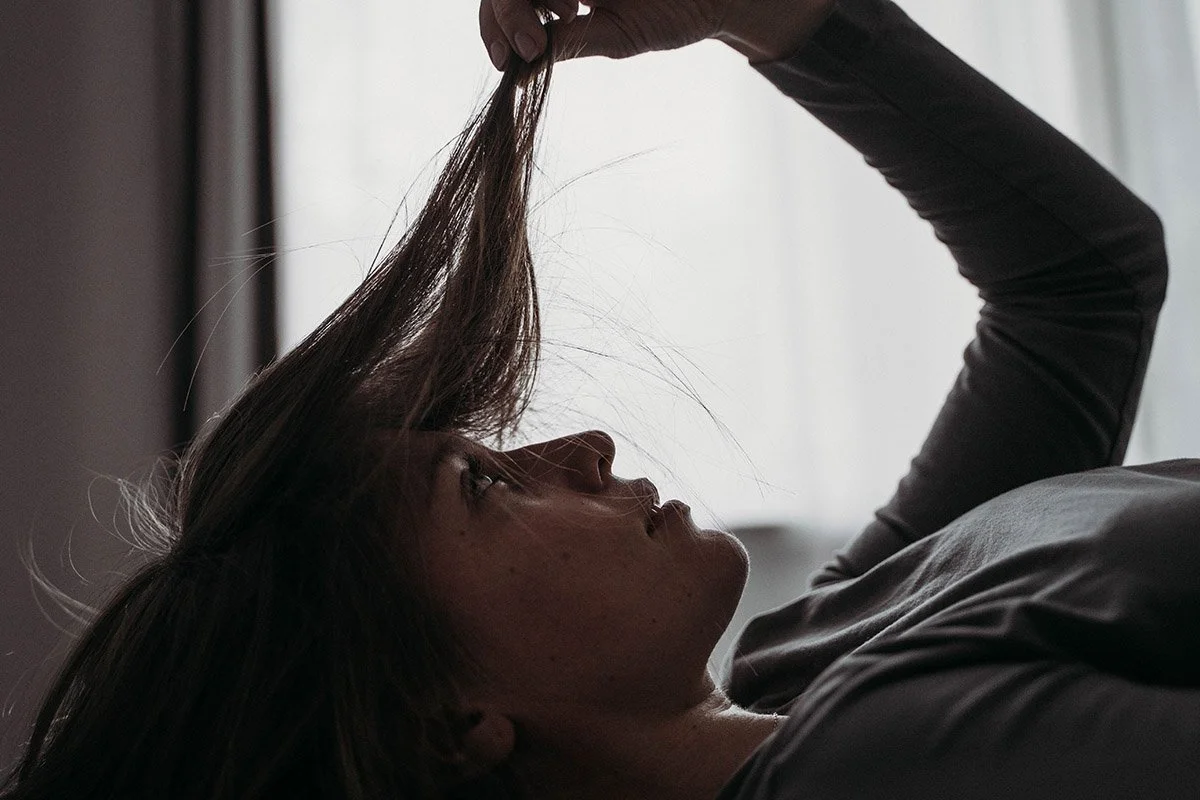
You've watched it happen gradually. More hair in the drain. More on your brush. A part that looks wider than it used to.
You've mentioned it to your doctor and gotten a shrug — and one of the usual explanations. Stress. Hormones. Age. Postpartum recovery.
What you probably haven't been told is that unexplained hair loss is one of the earliest and most consistent signs of Hashimoto's thyroiditis — an autoimmune condition that disrupts thyroid function and goes undiagnosed, on average, for years.
Most people dealing with hair loss have already cycled through serums, supplements, diets, and medications by the time they start looking for real answers. The frustration of trying everything and seeing nothing change is its own kind of exhausting, and that stress, as it turns out, can make the underlying problem worse.
At Nova Wellness, a functional medicine practice in San Francisco specializing in Hashimoto's and thyroid health, hair loss is rarely just hair loss. It's a signal. And it's one we take seriously.
What is Hashimoto’s Disease?
Hashimoto’s disease, or Hashimoto’s thyroiditis, is a chronic autoimmune condition where the immune system attacks the thyroid gland, leading to inflammation and damage. Hashimoto’s is the most common cause of hypothyroidism (an underactive thyroid), where the damaged thyroid fails to produce sufficient hormones.
What Is the Thyroid Responsible For?
The thyroid is a butterfly-shaped gland at the front of the neck. The thyroid gland is responsible for producing thyroid hormones. These hormones are used by every cell of the body. You can think of thyroid hormones as your body's accelerator. They signal every cell to function, grow, and repair, which is why their effects show up everywhere.
In your hair follicles, they drive the rate of hair growth. In your muscles and fat tissue, they regulate metabolism and how efficiently you recover from exercise. In your gut, they keep digestion moving. And in your brain, they support clear thinking and a stable mood.
Thyroid hormones are part of a larger hormonal ecosystem, one that includes insulin, estrogen, progesterone, testosterone, cortisol and vitamin D. These hormones are interdependent. When the thyroid is functioning well, it helps keep the whole system in balance - supporting metabolism, skin and hair health, reproductive function, digestion, and the nervous system. When it isn't, the ripple effects can be wide-ranging and easy to misattribute.
Why Hashimoto's Hair Loss Gets Missed
Hair follicles are among the most thyroid-sensitive tissues in the body. Thyroid hormones directly regulate the rate of hair growth — which is why, when thyroid function becomes erratic or insufficient, many people start to experience hair loss. Typically people experience overall thinning of hair on the head and body, and the loss of the outer eyebrows. Some people notice a change in hair texture, where the hair becomes more coarse.
In Hashimoto's, this happens because the immune system gradually attacks the thyroid gland itself. Hormone production becomes unstable — sometimes low, sometimes fluctuating — and symptoms like hair thinning, fatigue, and brain fog begin to surface. But because these symptoms build slowly and overlap with other common explanations, the thyroid connection frequently goes unrecognized.
There's also a testing problem. A standard workup typically measures only TSH, and a result within the "normal" reference range is treated as reassurance that the thyroid isn't the issue. But standard reference ranges extend up to 4.5 or higher, while many people begin experiencing symptoms once TSH rises above 2.5. The optimal range is often closer to 1 to 1.5.
Critically, thyroid antibodies — the marker that actually confirms Hashimoto's — are rarely included in a routine panel. Antibodies can be elevated, indicating active autoimmunity, even when TSH looks normal. Without testing for them, Hashimoto's remains invisible on paper while symptoms continue to worsen.
Hair Loss Is Rarely the Only Symptom
In the women we see at Nova Wellness, Hashimoto's hair loss almost never appears in isolation. It typically shows up alongside a cluster of symptoms that have each been explained away on their own:
Fatigue that doesn't resolve with rest. Not ordinary tiredness — the kind that persists through a full night's sleep and makes mornings feel like you’re dragging through the mud. Thyroid hormones are the body's cellular accelerator. When they're insufficient, energy production drops across every system.
Brain fog. Difficulty concentrating, slow recall, a sense of mental heaviness that makes straightforward tasks feel harder than they should. Because no lab test captures it, brain fog is frequently attributed to stress or poor sleep. In Hashimoto's, it's often thyroid-driven.
The feeling of not being yourself. This one is harder to name but shows up consistently: a sense of being depleted, disconnected, or diminished. You’re functioning on the outside while struggling internally. Many women describe it as feeling like a shell of who they used to be.
When these symptoms appear together they form a pattern that often points toward Hashimoto's. The problem is that conventional medicine tends to evaluate each symptom separately rather than reading them as a system.
The Functional Medicine Approach to Hashimoto's Hair Loss
At Nova Wellness, we don't start by asking which symptoms to treat. We start by asking why the immune system began attacking the thyroid in the first place.
Hashimoto's is fundamentally an autoimmune condition. The thyroid is the target, but the immune system is the driver — and the immune system is shaped by gut health, inflammation, nutrient status, cortisol, environmental toxin exposure, blood sugar regulation, and the nervous system. This is why two people with identical Hashimoto's diagnoses can have completely different root causes, and why a one-size-fits-all protocol rarely produces lasting results.
In our functional medicine practice, San Francisco patients often come to Nova Wellness having already tried conventional treatment — thyroid medication that helped partially, or not at all, because the deeper contributors were never addressed. Medication can be an important tool. But it rarely resolves Hashimoto's hair loss on its own, because the root cause of the thyroid issue and hair loss are upstream of the thyroid.
A complete workup at Nova Wellness typically includes:
Full thyroid panel: TSH, Free T4, Free T3, Reverse T3, Thyroid antibodies (TPO, TgAb, TSI)
Cortisol and sex hormone testing
Ferritin, vitamin D, and key nutrient markers that directly affect hair growth and thyroid function
Gut and microbiome assessment - given the strong link between gut health and immune regulation
Evaluation of food intolerances — particularly gluten, dairy, and soy, which are most commonly associated with thyroid autoimmunity
Assessment for environmental toxins and a medically-supported detoxification may be recommended
From there, care is individualized. Because the root cause of your Hashimoto's is unique to you, and your treatment should reflect that.
Does This Sound Like You?
The women we see at Nova Wellness with Hashimoto's are often dedicated employees, doting mothers, and pillars of their communities — the type of people who hold everything together for everyone around them. They're high-performing and health-conscious. They're doing the things they're “supposed to” do. And yet they're depleted, confused, and suffering in ways that are hard for them to describe. Not just physically exhausted — but existentially.
What they want isn't better lab numbers. They want their energy back. They want mental clarity, confidence, and the freedom to fully participate in their own lives. More than anything, they want to feel like themselves again — and that's exactly what we work toward together.
What Becomes Possible When the Root Cause Is Addressed
At Nova Wellness, we've seen clients with very high Hashimoto's antibody levels - the kind of numbers that conventional medicine considers permanent - reach undetectable antibody levels after working holistically on gut health, detox pathways, diet, and the emotional and lifestyle factors that contributed to immune dysregulation. Hair regrowth, restored energy, and mental clarity return as evidence that the body is rebalancing.
For us, Hashimoto's is personal. Dr. Jen Mann, founder of Nova Wellness, healed herself from Hashimoto's using the same root-cause approach she brings to every patient. She knows what it's like to want a full life: to travel, to feel vibrant, to have enough energy to actually show up for the things that matter, and she knows what it feels like when that life seems out of reach. She's lived both sides of it. And that's exactly why she does this work.
If You're Searching for Answers in San Francisco
If you're experiencing Hashimoto's hair loss or a cluster of symptoms that haven't found an explanation, Nova Wellness offers a more complete path forward.
When a standard panel comes back "normal" but you continue to feel terrible, we go deeper. We serve clients in San Francisco and the surrounding Bay Area who are ready for thyroid and Hashimoto's care that goes beyond symptom management. Our goal goes beyond symptoms to find out why they're happening in the first place. That means running deep, functional tests to understand what's going on physiologically. But it also means listening carefully to your history, your patterns, your own sense of what's been off and for how long. You've been living in this body, and that knowledge matters. Together, we'll identify your triggers, understand what helps you feel better, and build a plan that's specific to you - not a generic template, but a real path back to feeling like yourself.
Nova Wellness is a functional medicine practice in San Francisco specializing in Hashimoto's, thyroid health, and root-cause care. Schedule a discovery call to explore your symptoms and find out whether our approach is the right fit.